Native American Art Exhibition
A Virtual Museum by Jay Ding
Curator's Statement (Scroll)
This selection of art represents the myth of the “Noble Savage,” an idealized conception and portrayal of the Native Americans as both primitive and pure because of their separation from the corruption of civilization.
I chose these specific pieces because they all illustrate the Noble Savage archetype with subtle yet significant differences.
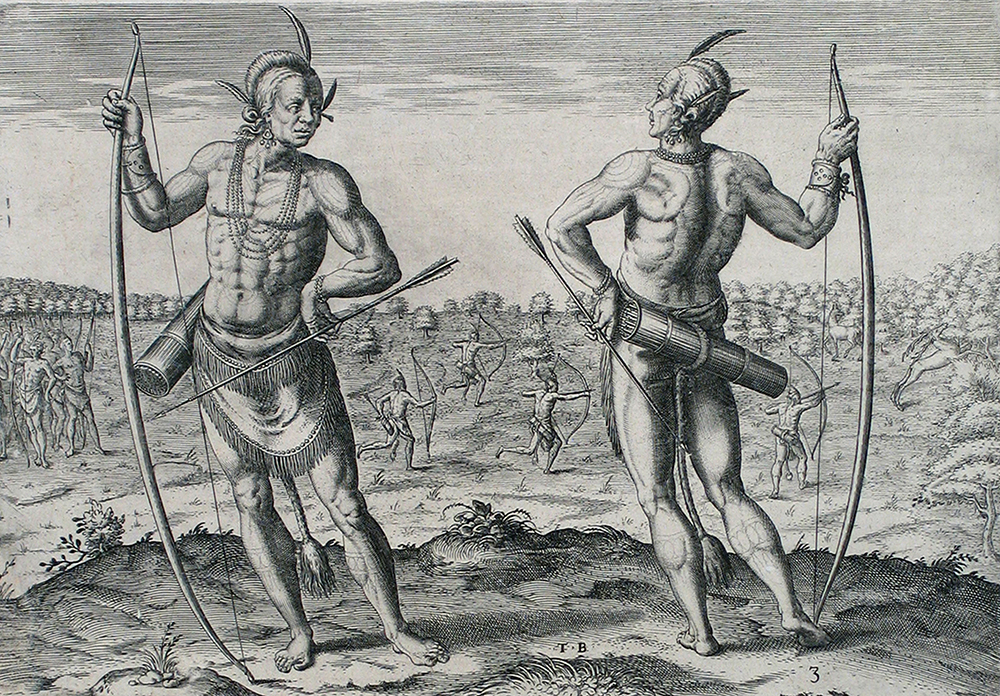
The first piece was made by Theodor de Bry (1528-1598), a Franco-Flemish engraver. His images were made to give Europeans a detailed depiction of the appearance and behaviors of Native Americans on Roanoke Island. The particular piece included in this exhibition romanticizes Native American lifestyle to a certain extent. Having them stand tall, look noble and at ease, and be in nature expresses both their "nobility" and their "savagery".
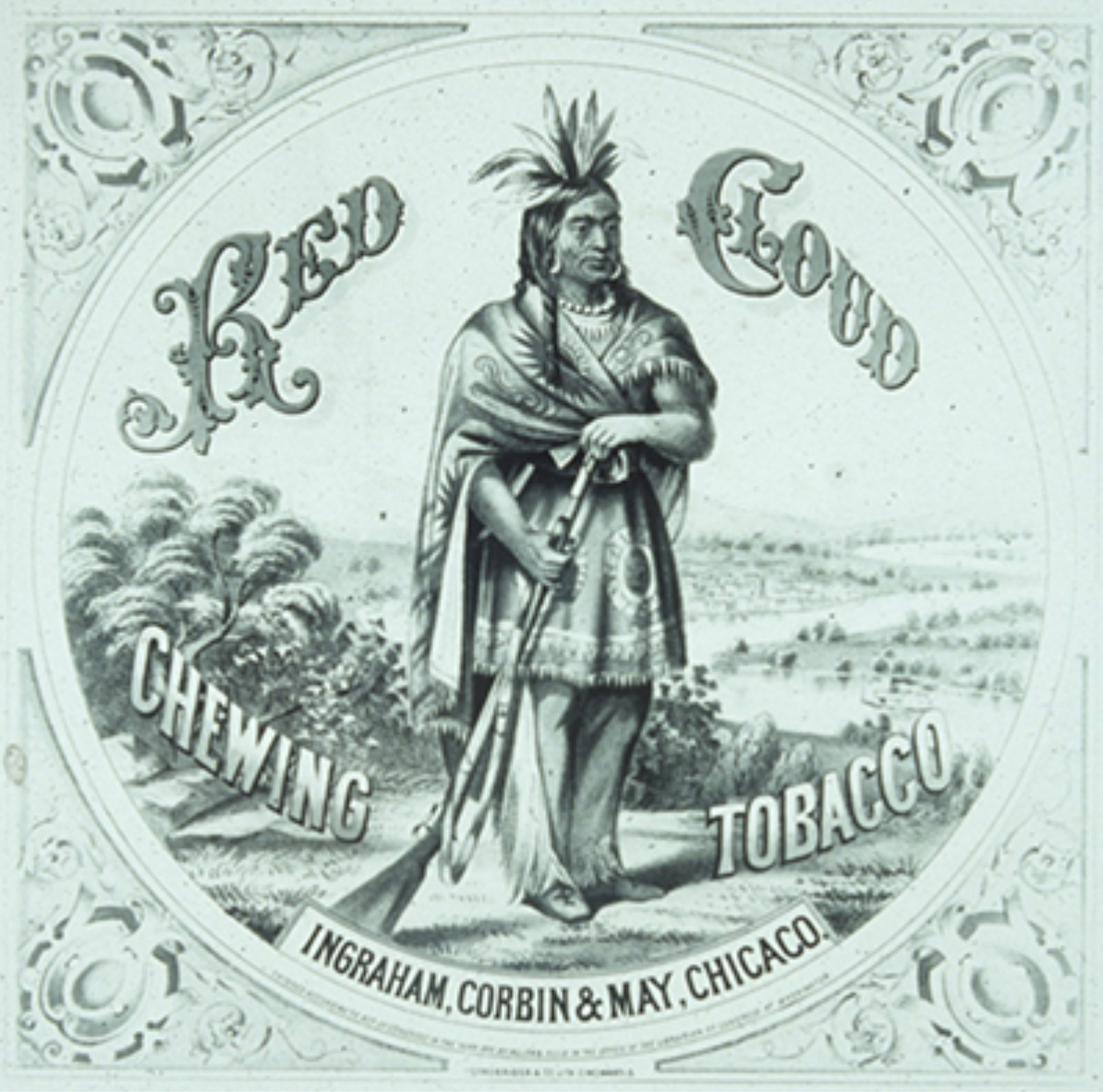
The second piece, made by Strobridge & Co. Lith. for the Red Cloud Chewing Tobacco company uses a Native American to appeal to people through an advertisement. He is portrayed as "noble" through his gaze into the distance and through his tall stance, yet he is "savage" in the way that he dresses, holds the gun, and is in nature and not industrialized society.
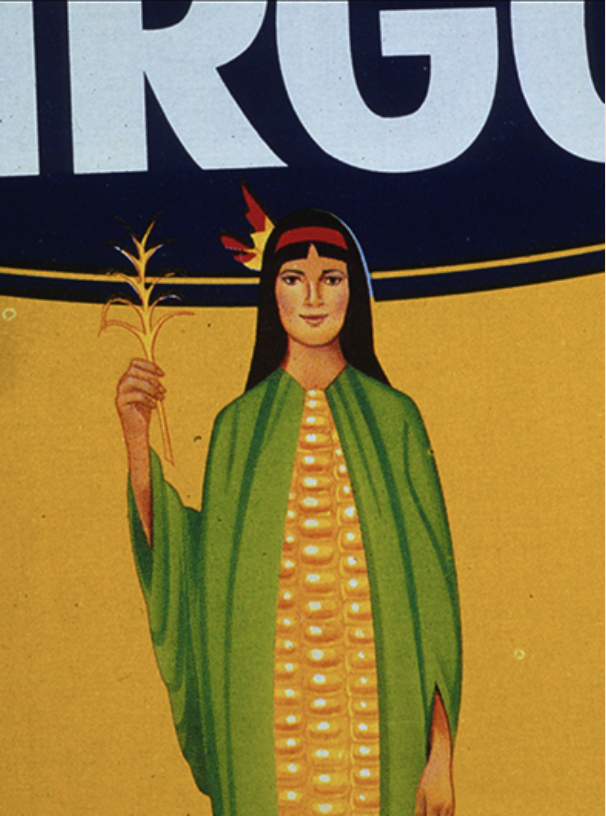
The third piece is found on the cover of containers of Argo Corn Starch on the 1964 and 1992 designs. The "corn maiden", as it is called by Argo, is a Native American woman who is quite literally made out of corn. The inspiration for this could be the Native American legend of the Corn Maiden, who grew corn wherever she went because she had leprosy that made her grow corn on her skin. The corn maiden art on the Argo Corn Starch containers is portrayed as "noble" through her mysterious smile and tall stature, yet is somewhat "savage" through the way she is partially corn and not fully human.
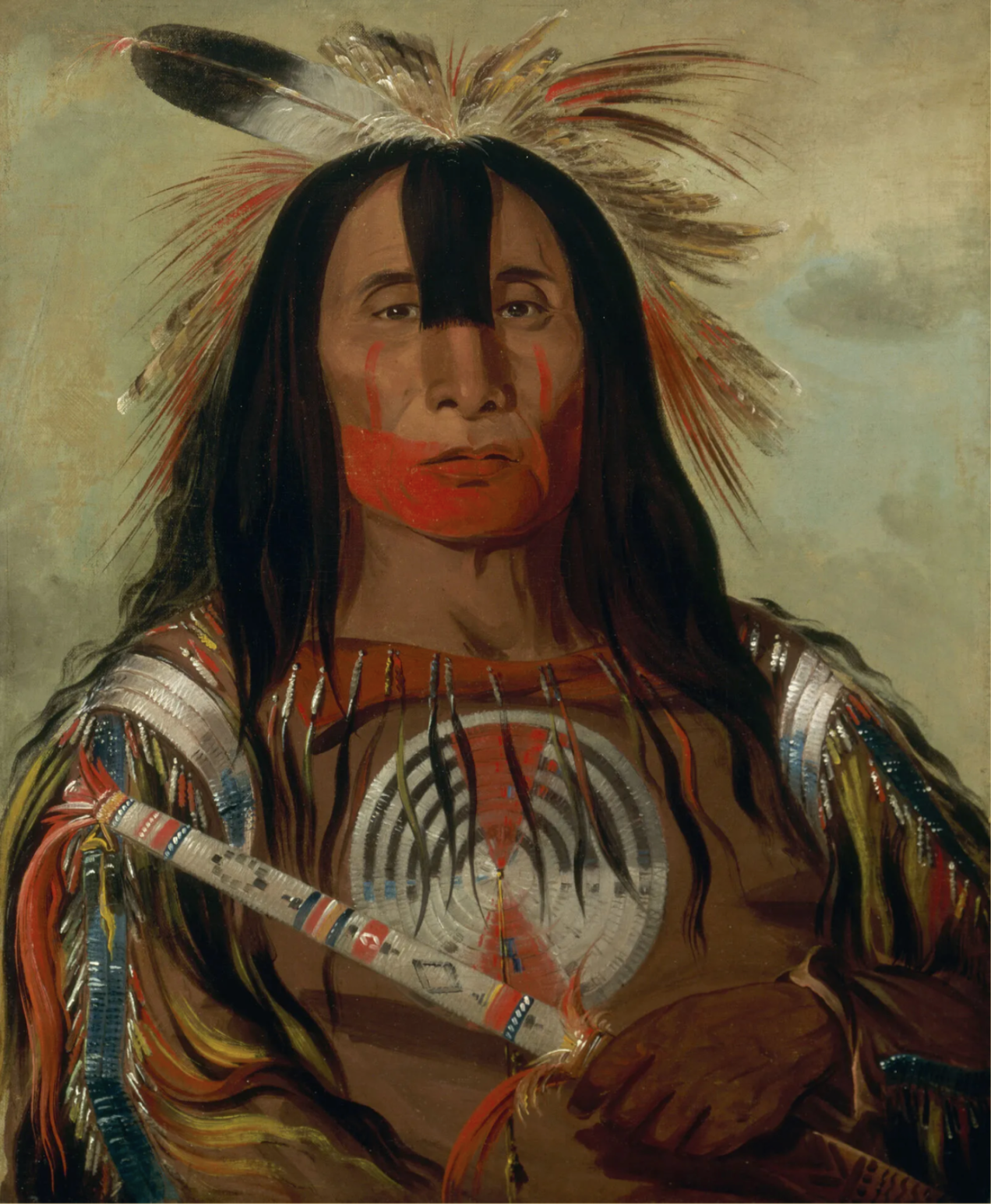
The fourth piece was made by George Catlin in 1832. It is a portrait of a First Nation man in traditional attire. Interestingly, this painting was made to portray Native Americans in a positive light. It was made by Catlin to portray the nobility of Native Americans (and put them in a positive light), and some did see the nobility, others continued to see the Native Americans as "noble savages".
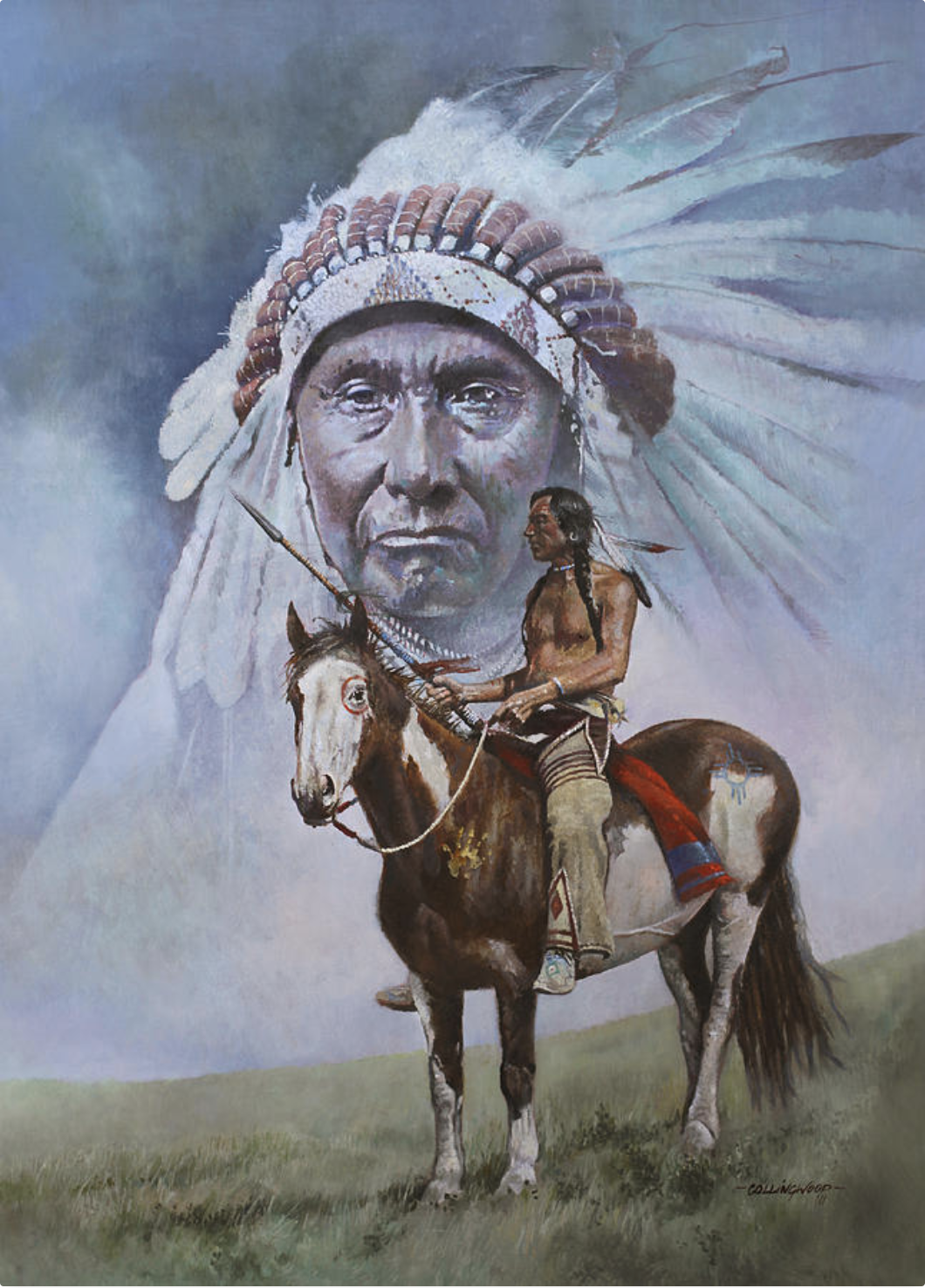
The fifth piece is a more contemporary piece made by Chris Collingwood in 2011, titled Cheif Joseph. It portrays Native Americans as being "noble" once again through the tall stature and noble gaze, yet it also portrays them as "savages" through the way they are dressed and the way they are in nature.
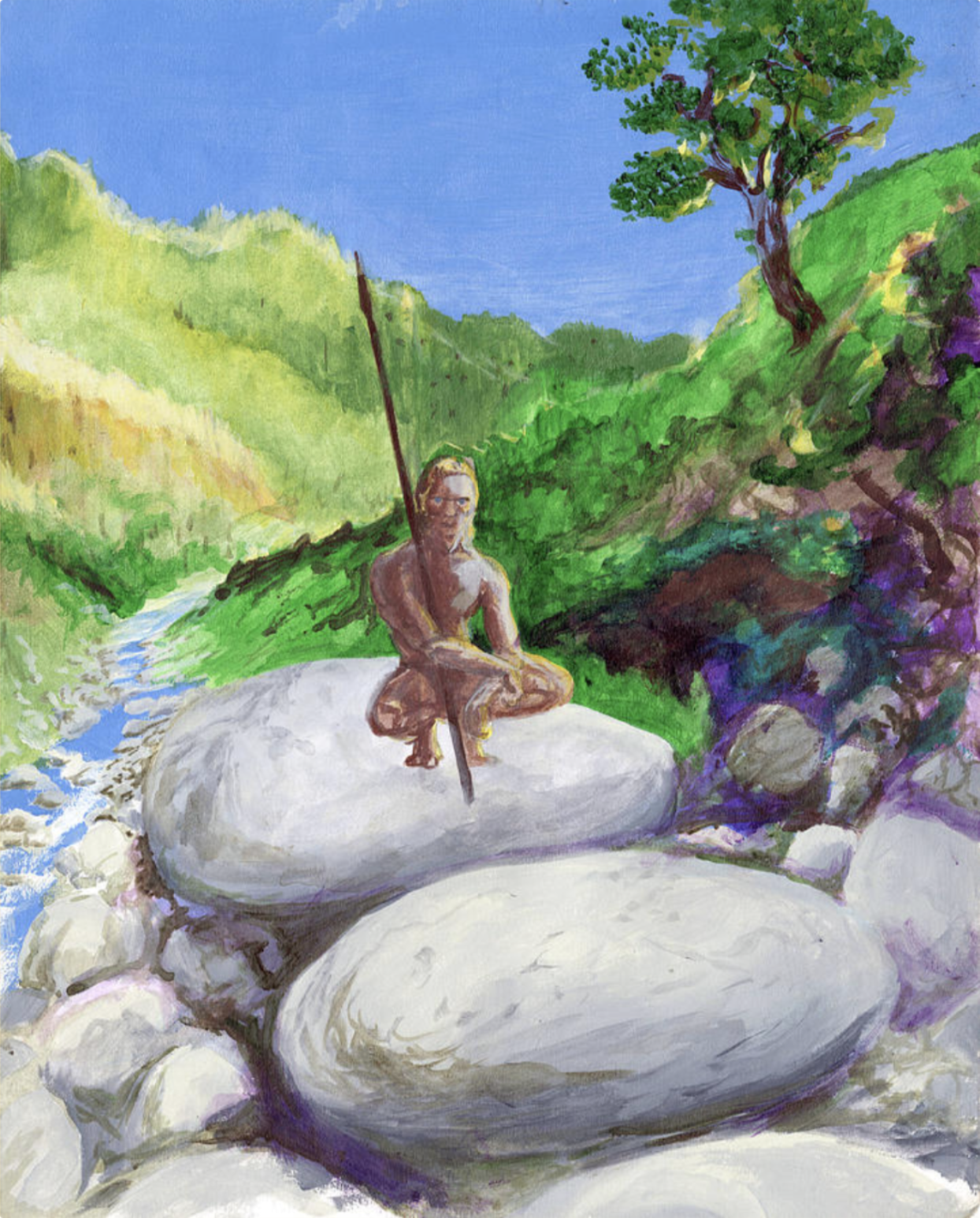
The sixth and last piece is also a contemporary piece made by Noble Savage in 2013, titled Noble Savage. The title of the piece is a play on words, as the artist is portraying Native Americans as "noble savages". The singular Native American at the center of the piece is almost naked and wields a spear rather than a more modern weapon. He has a backdrop of lush, green nature and blue water. This is his savagery–his connection to nature. His hard gaze portrays him as being noble to a certain extent.
I have ordered these images from least idealized/surreal to most idealized/surreal. For example, the first piece is quite literally an artist's attempt at a accurate depiction, while the last piece is a highly surreal and idealized depiction of a Native American in beautiful nature.
Enjoy the exhibit.
-
Exhibits:
- Exhibit 1: Cover engraving from A Briefe and True Report of the New Found Land of Virginia by Thomas Harriot, art by Theodor de Bry
- Exhibit 2: Red Cloud Chewing Tobacco, by Strobridge & Co. Lith.
- Exhibit 3: Argo Corn Starch (1964/1992 versions), by Argo Corn Starch
- Exhibit 4: Painted portrait of a First Nation man in traditional attire, by George Catlin
- Exhibit 5: Cheif Joseph, by Chris Collingwood
- Exhibit 6: Noble Savage, by Noble Savage
Cover engraving from A Briefe and True Report of the New Found Land of Virginia by Thomas Harriot (Scrollable)
Theodor de Bry, 1590
The piece was made by Theodor de Bry (1528-1598), a Franco-Flemish engraver. His images were made to give Europeans a detailed depiction of the appearance and behaviors of Native Americans on Roanoke Island. The particular piece included in this exhibition romanticizes Native American lifestyle to a certain extent. Having them stand tall, look noble and at ease, and be in nature expresses both their "nobility" and their "savagery".
Found on https://ackland.org/exhibition/the-new-found-land-engravings-by-theodor-de-bry-from-the-collection-of-michael-n-joyner/
Red Cloud Chewing Tobacco (Scrollable)
Strobridge & Co. Lith.
This piece was made by Strobridge & Co. Lith. for the Red Cloud Chewing Tobacco company uses a Native American to appeal to people through an advertisement. He is portrayed as "noble" through his gaze into the distance and through his tall stance, yet he is "savage" in the way that he dresses, holds the gun, and is in nature and not industrialized society.
Found on https://designobserver.com/feature/victims-of-the-image-ignobility-for-the-noble-savage/39654
Argo Corn Starch (Scrollable)
Argo Corn Starch
This art is found on the cover of containers of Argo Corn Starch on the 1964 and 1992 designs. The "corn maiden", as it is called by Argo, is a Native American woman who is quite literally made out of corn. The inspiration for this could be the Native American legend of the Corn Maiden, who grew corn wherever she went because she had leprosy that made her grow corn on her skin. The corn maiden art on the Argo Corn Starch containers is portrayed as "noble" through her mysterious smile and tall stature, yet is somewhat "savage" through the way she is partially corn and not fully human.
Found on https://designobserver.com/feature/victims-of-the-image-ignobility-for-the-noble-savage/39654, background information found on https://www.rejectedprincesses.com/princesses/corn-maiden
Painted portrait of a First Nation man in traditional attire (Scrollable)
George Catlin
This piece was made by George Catlin in 1832. It is a portrait of a First Nation man in traditional attire. Interestingly, this painting was made to portray Native Americans in a positive light. It was made by Catlin to portray the nobility of Native Americans, and some did see the nobility, others continued to see the Native Americans as "noble savages".
Found on https://www.facinghistory.org/stolen-lives-indigenous-peoples-canada-and-indian-residential-schools/chapter-2/noble-savage-wretched-indian
Cheif Joseph (Scrollable)
Chris Collingwood
This is a more contemporary piece made by Chris Collingwood in 2011, titled Cheif Joseph (there is a misspelling of "Chief" in the name). It portrays Native Americans as being "noble" once again through the tall stature and noble gaze, yet it also portrays them as "savages" through the way they are dressed and the way they are in nature.
Found on https://fineartamerica.com/featured/cheif-joseph-chris-collingwood.html
Noble Savage (Scrollable)
Noble Savage
This last piece is also a contemporary piece made by Noble Savage in 2013, titled Noble Savage. The title of the piece is a play on words, as the artist is portraying Native Americans as "noble savages". The singular Native American at the center of the piece is almost naked and wields a spear rather than a more modern weapon. He has a backdrop of lush, green nature and blue water. This is his savagery–his connection to nature. His hard gaze portrays him as being noble to a certain extent.
Found on https://fineartamerica.com/featured/noble-savage-noble-savage.html